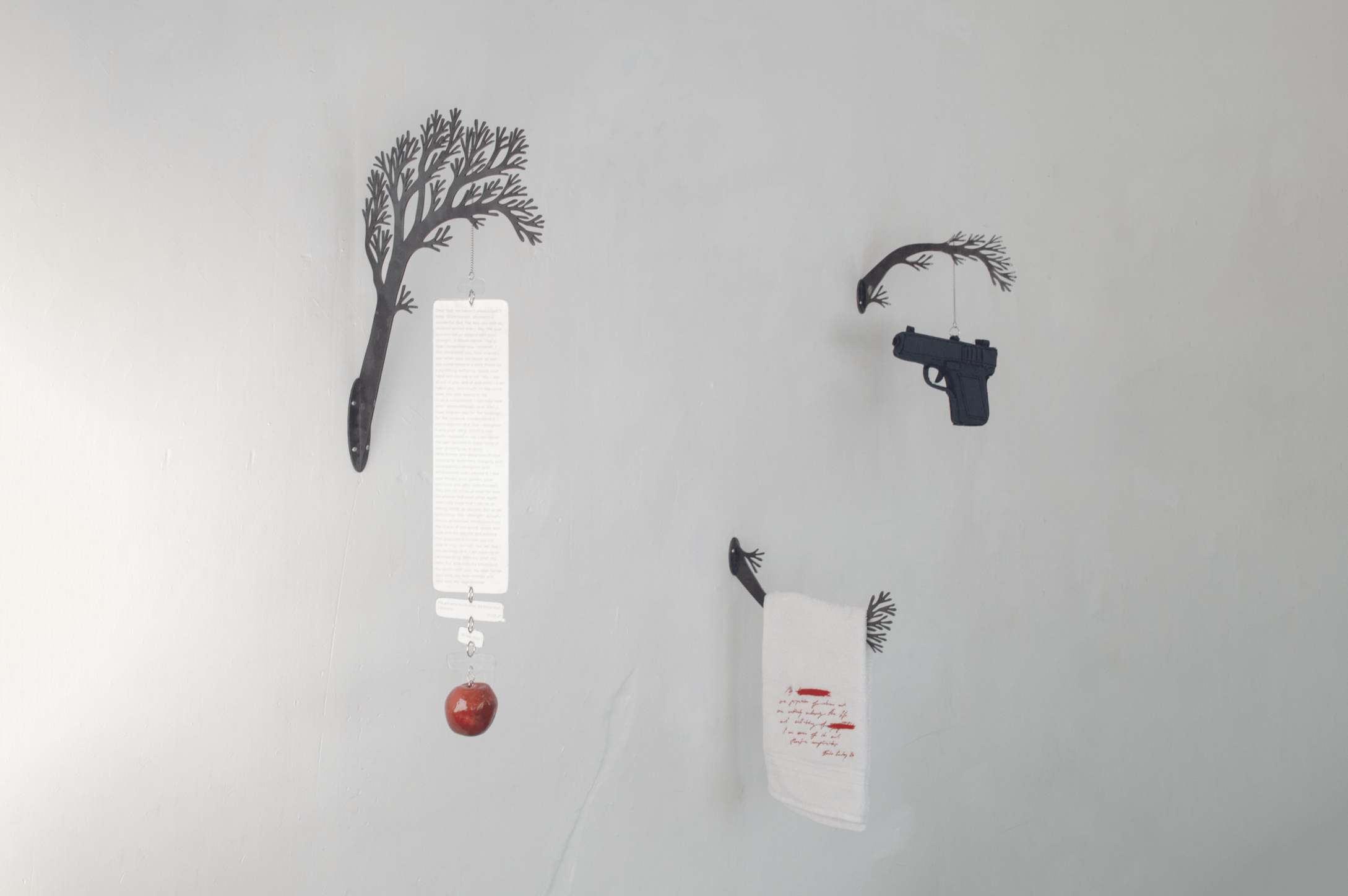

Repeat (Trilogy), 2026 is a trilogy of sculptures exploring the intergenerational transmission of trauma, violence, and responsibility. Through autobiographical objects and symbolic materials, the series examines how inherited experiences shape individual and collective memory.
The progression of the titles—Repeat, Repeat², and Repeat³—borrows the notation of mathematical exponents. This formal device alludes to the statistical reality of domestic violence and the measurable likelihood of its transmission across generations. The superscripts evoke a sense of mathematical certainty, suggesting an unsettling tension between probability and prophecy: what appears as a personal family history is also part of a broader social pattern whose repetition is documented, predictable, and therefore impossible to dismiss as an isolated exception.

Repeat, 2026
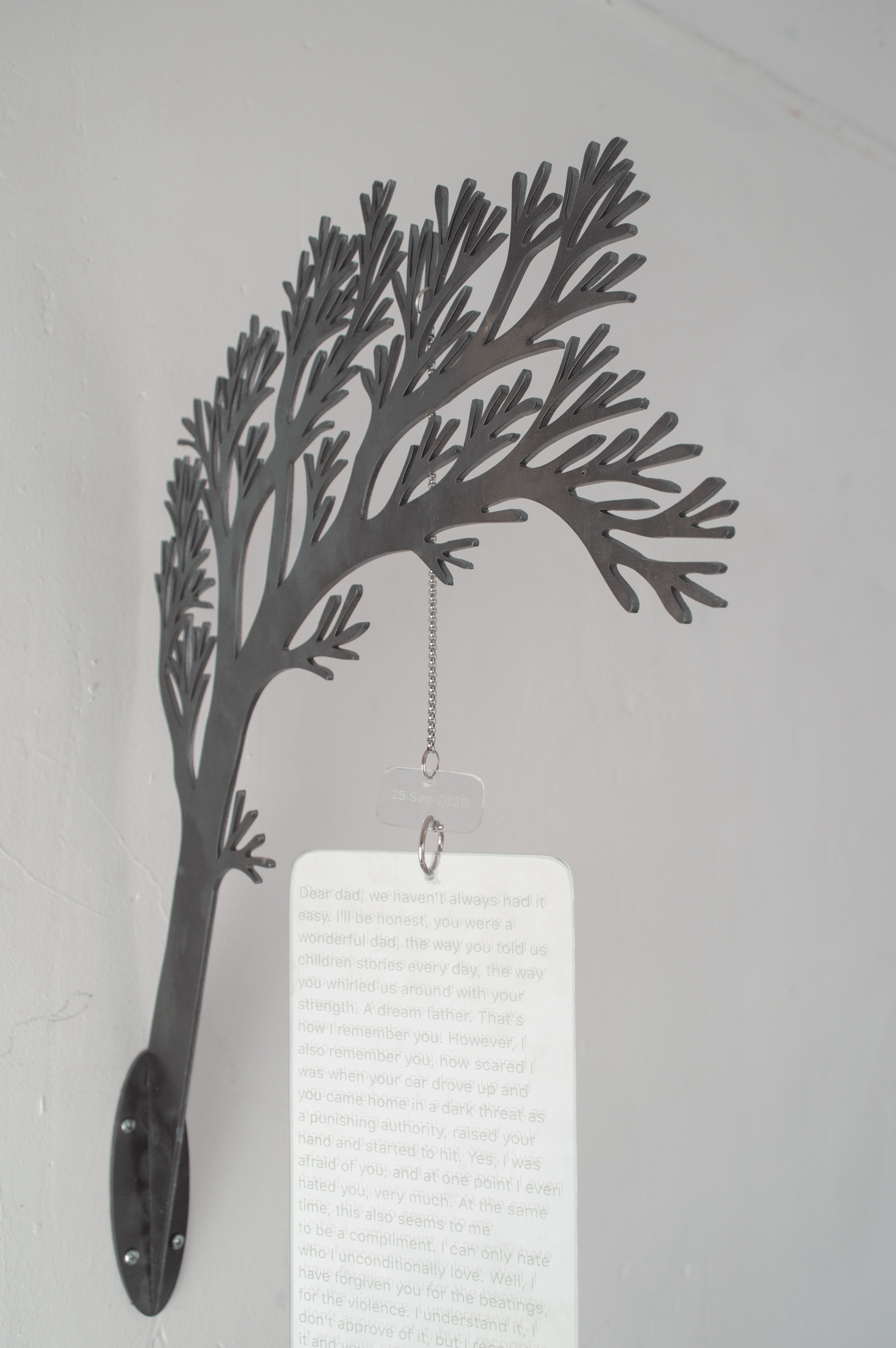
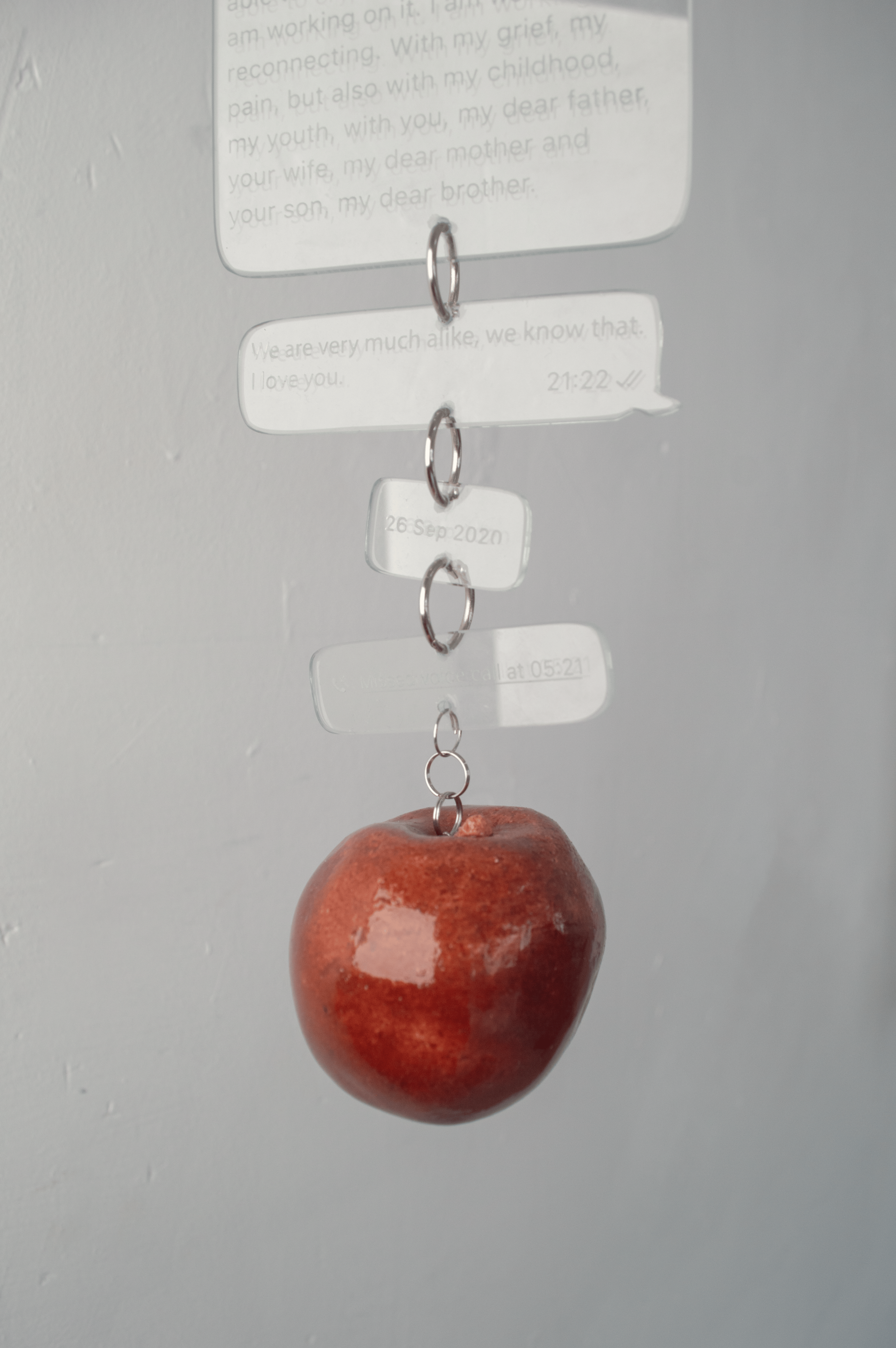
steel, engraved glass, ceramic, 85cm x 34cm x 10cm
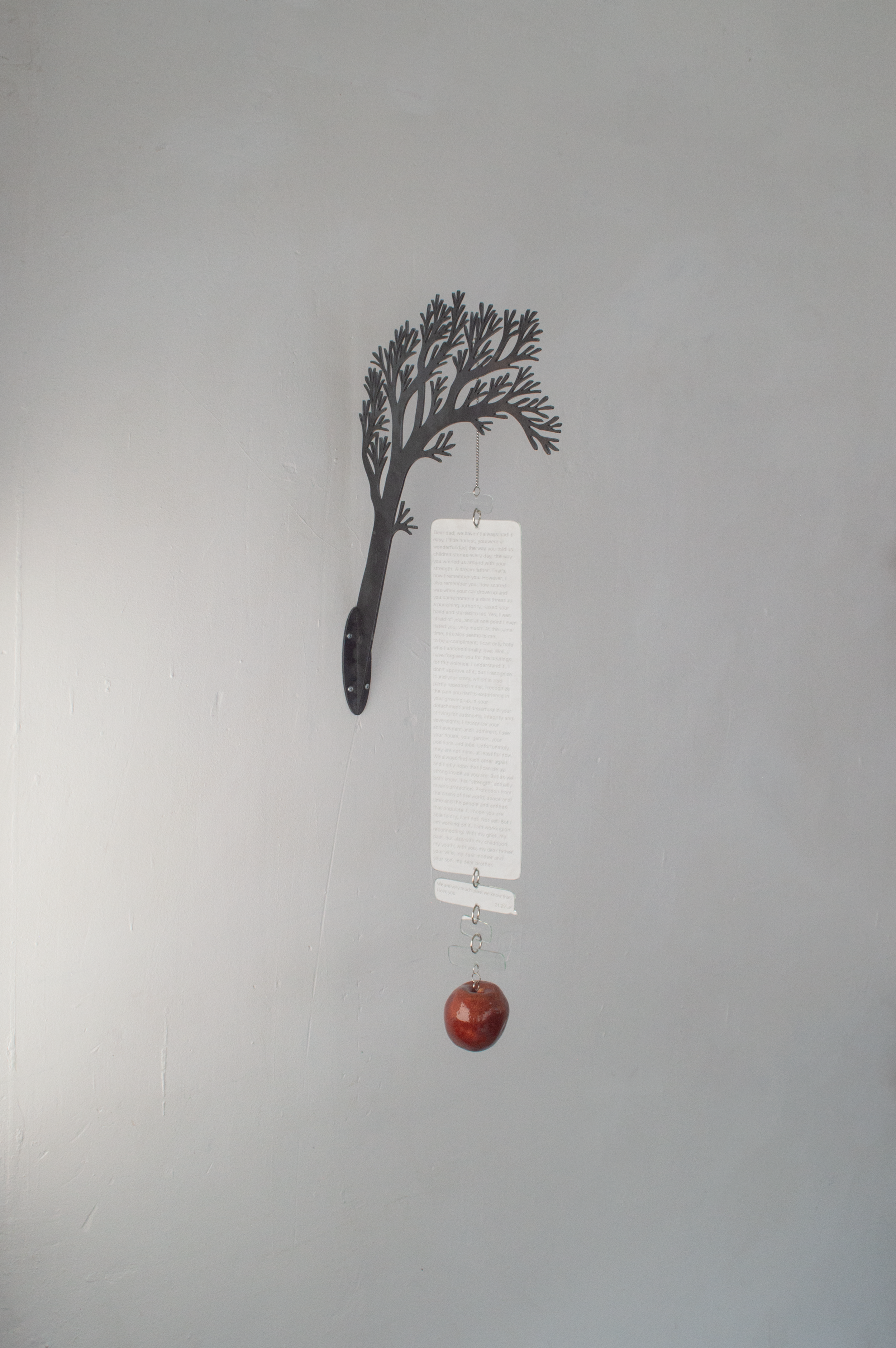
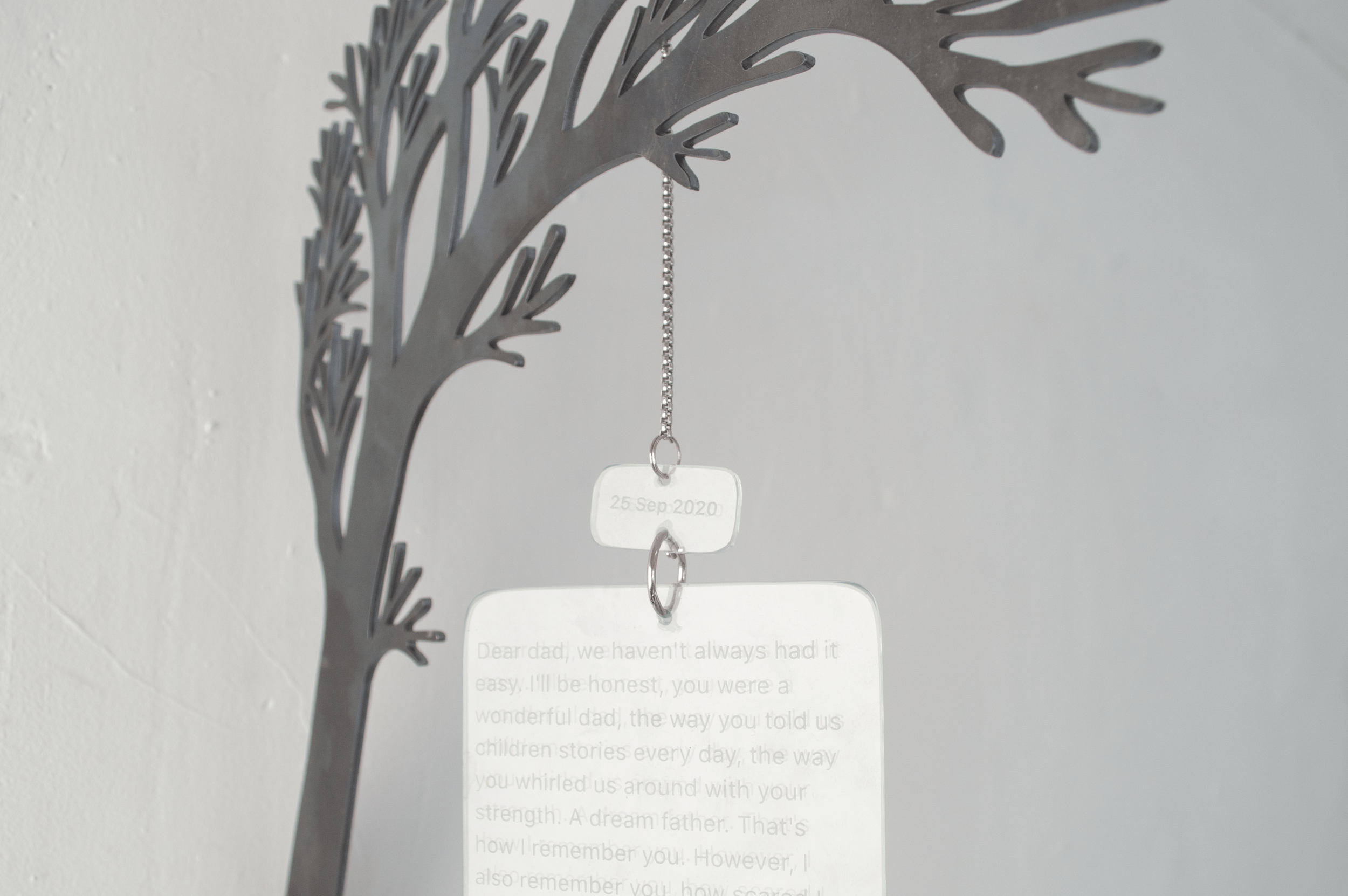
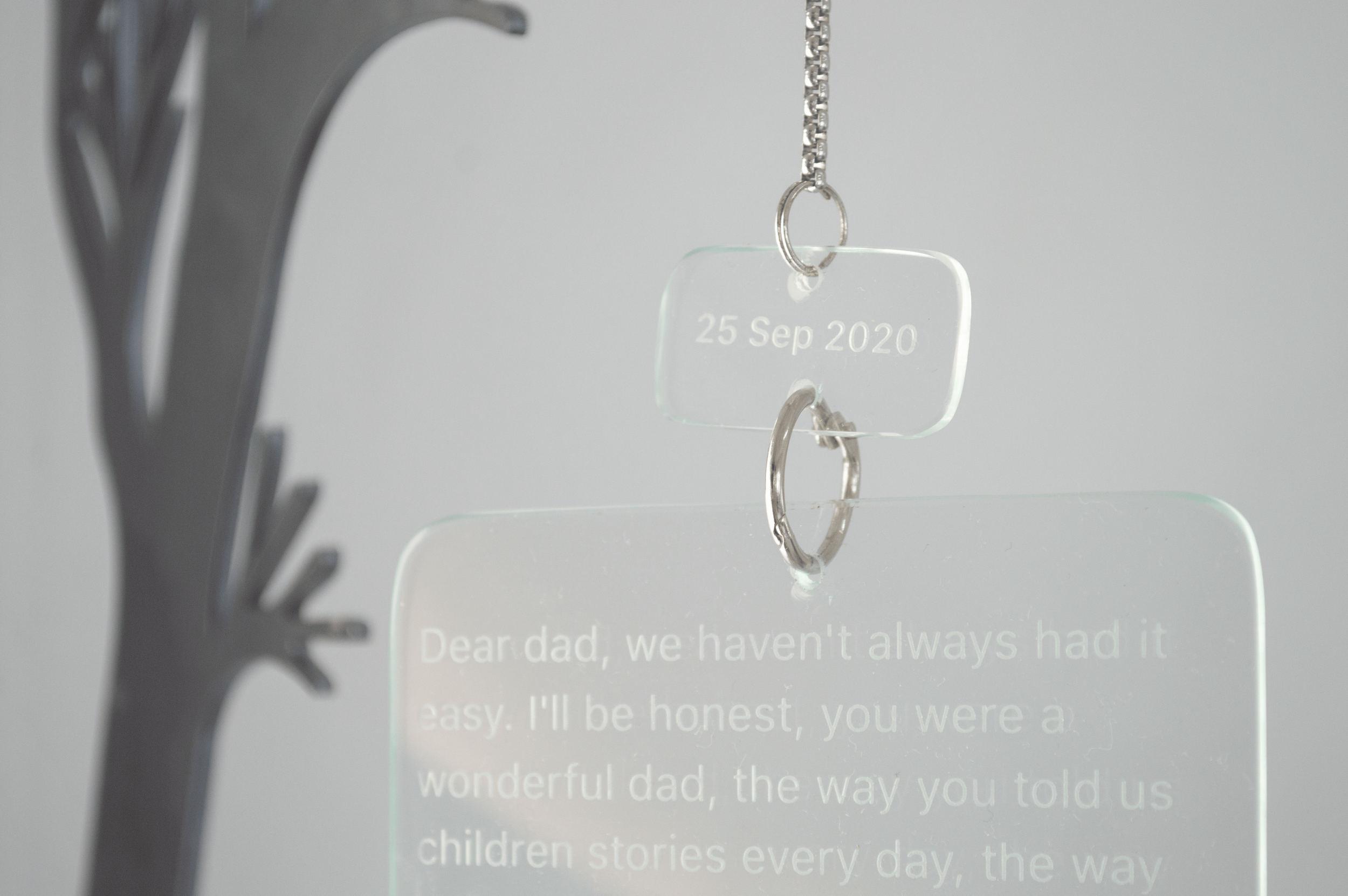
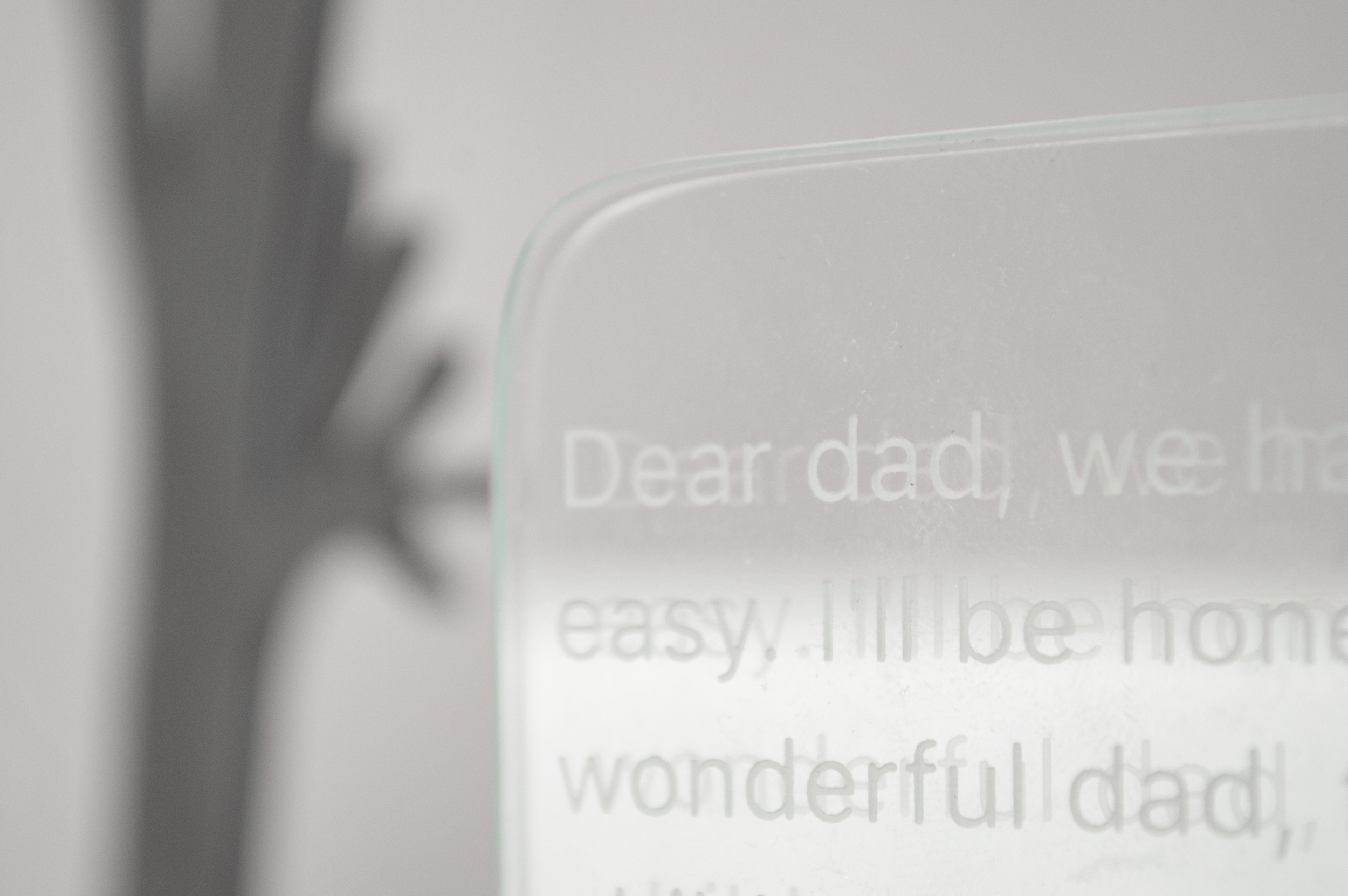
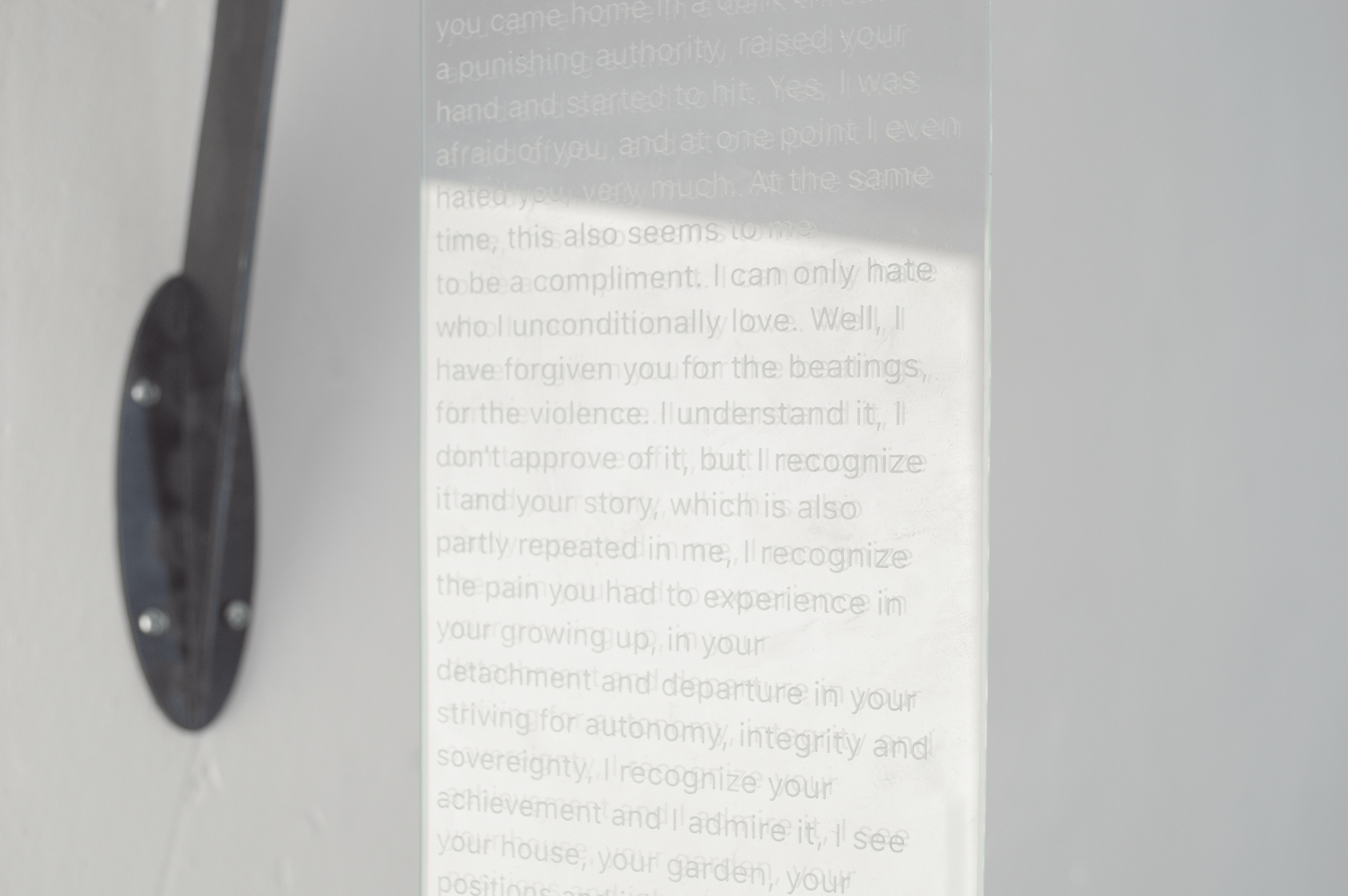
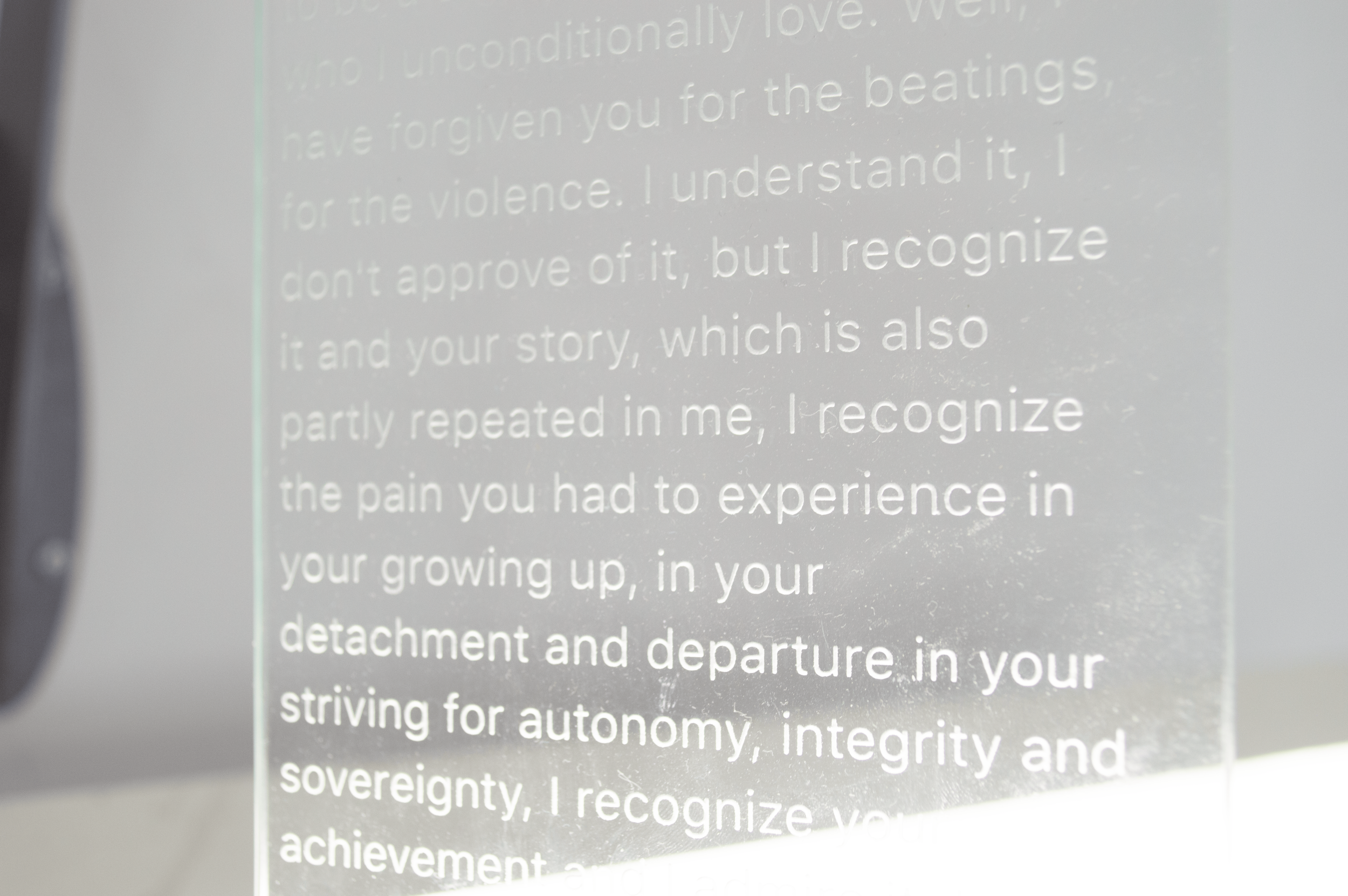
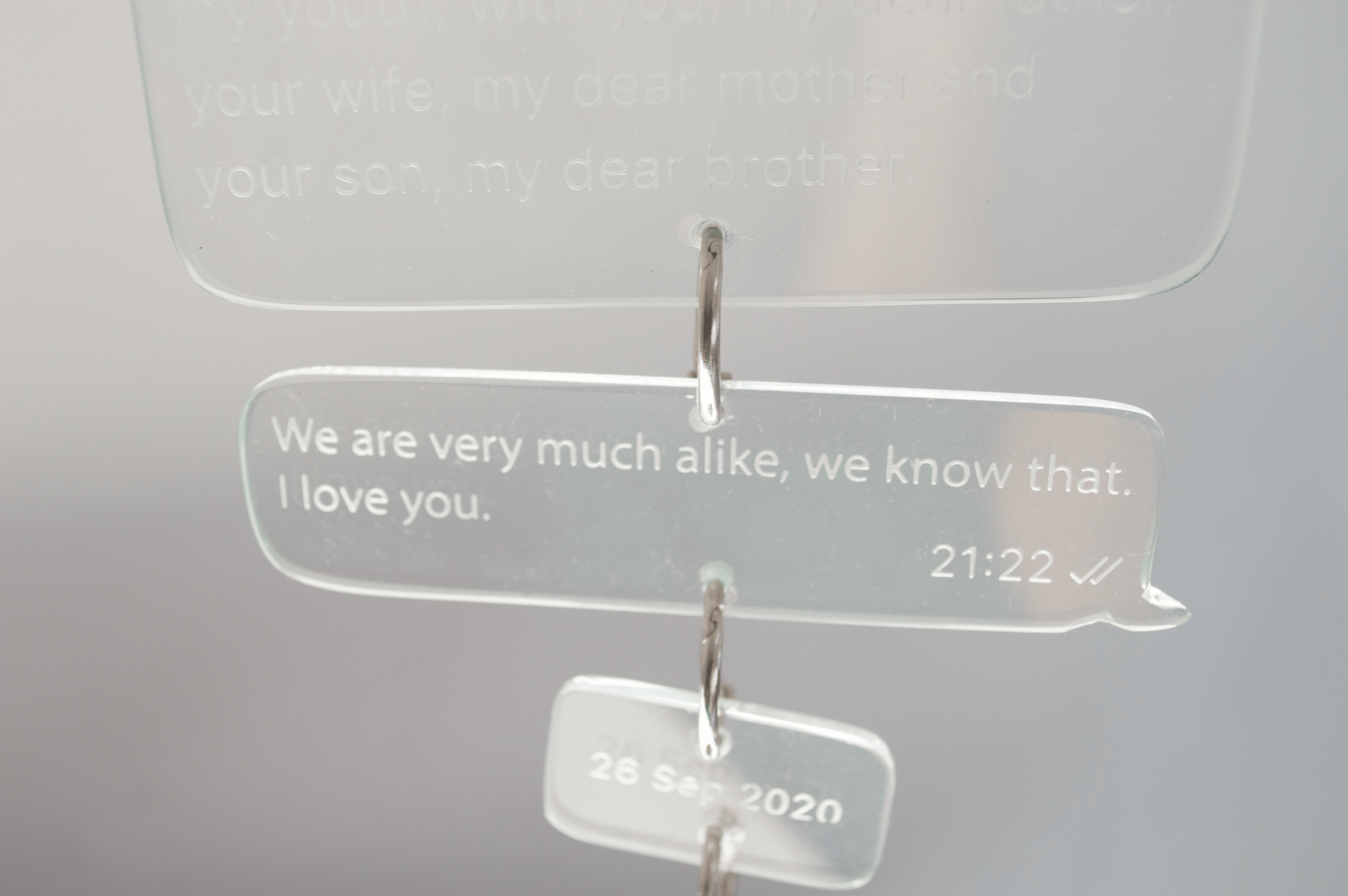
Repeat is a wall-mounted sculpture composed of a steel branch, suspended engraved glass plates, and a ceramic apple. The engraved glass carries an intimate WhatsApp message written by the artist on the night of his birthday in September 2020, while sitting alone in a nightclub in Zurich. The text reflects on childhood memories of tenderness and violence, tracing the complex emotional inheritance within a father–son relationship.
The engraved glass plates hang from the steel branch like a suspended chain of memories. Their transparent surfaces bear fragments of a deeply personal letter addressed to the artist's father—a text that moves between childhood tenderness, fear, violence, forgiveness, and the recognition of inherited pain.
At the lowest point, a ceramic apple recalls a proverb the artist's father repeatedly used: "The apple doesn't fall far from the tree." Within the work, the saying becomes both a personal echo and a broader reflection on inheritance. Rather than suggesting inevitability, the apple points to the complex transmission of love, protection, violence, and resilience across generations. Suspended beneath the engraved letter, it asks whether what is inherited must also be repeated.
Repeat², 2026
steel, fabric, aluminum
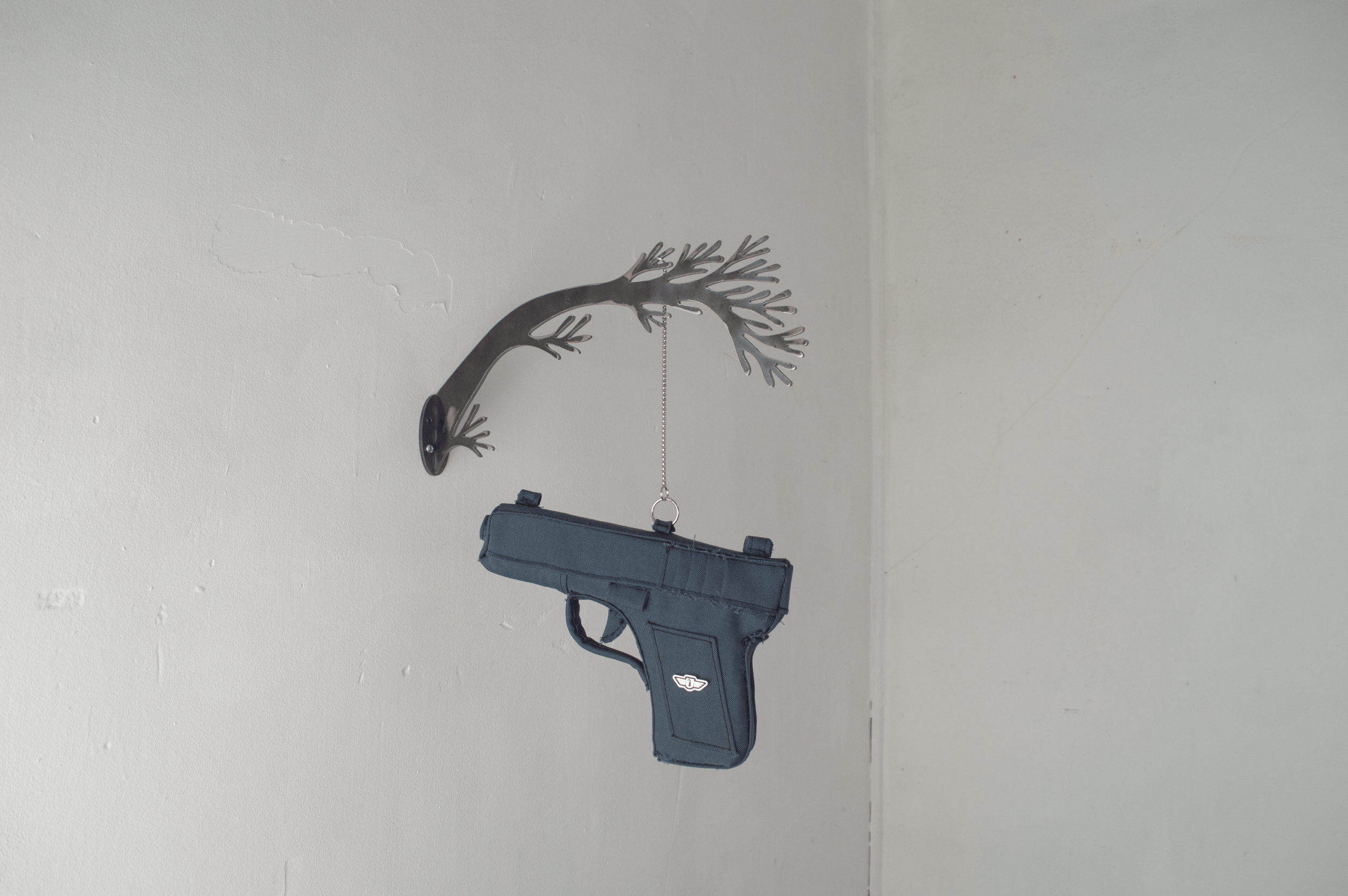
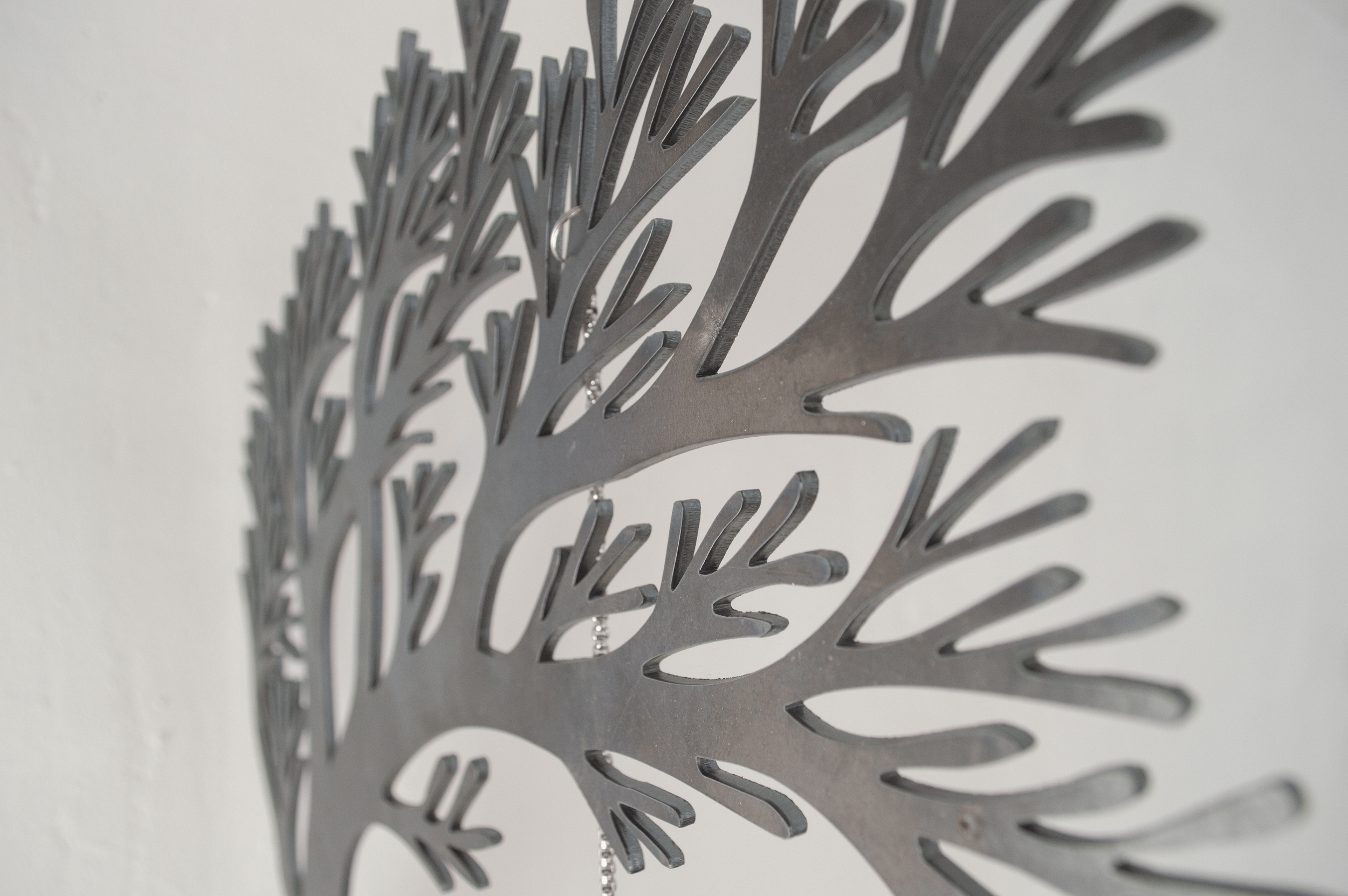
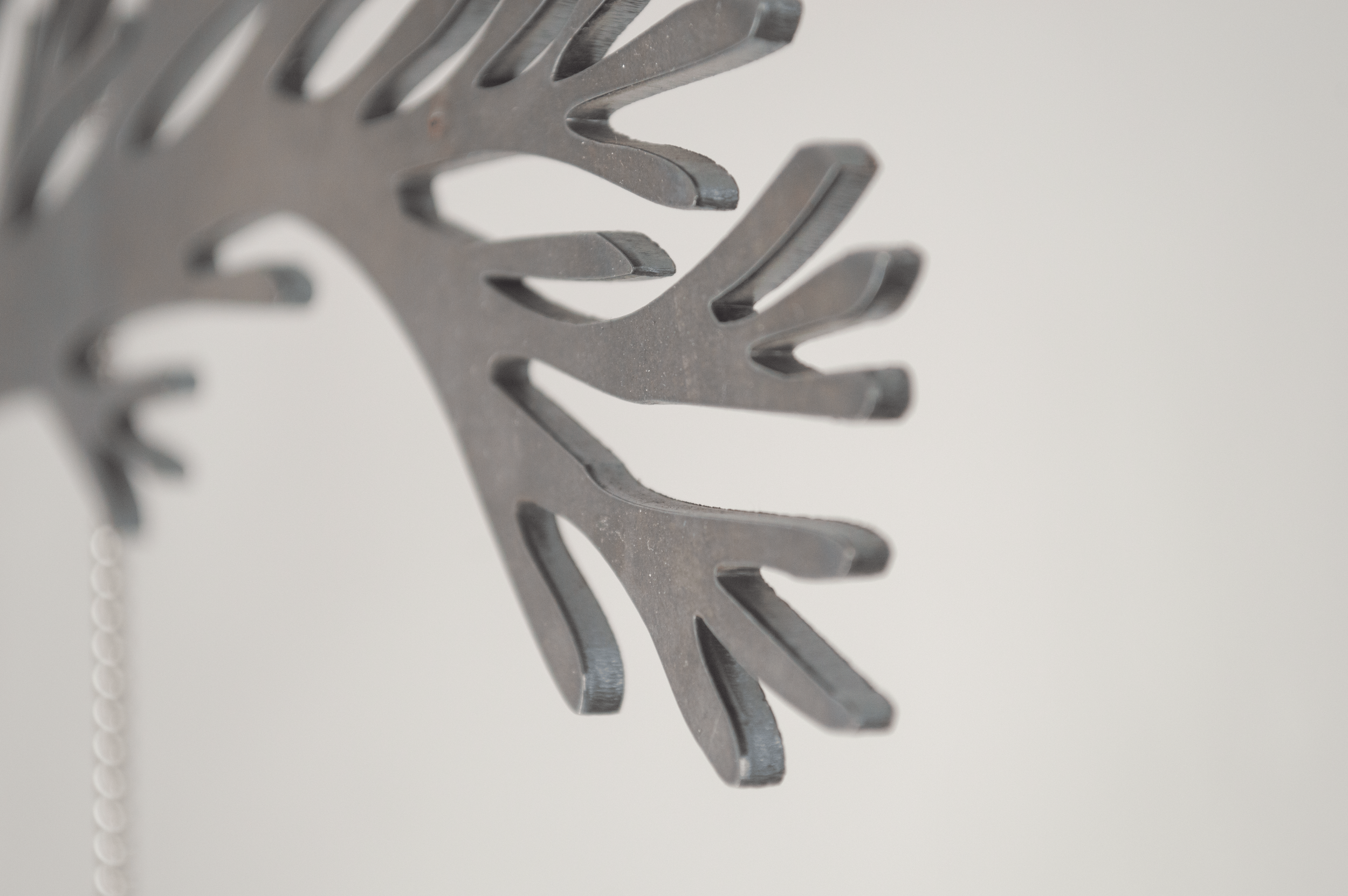
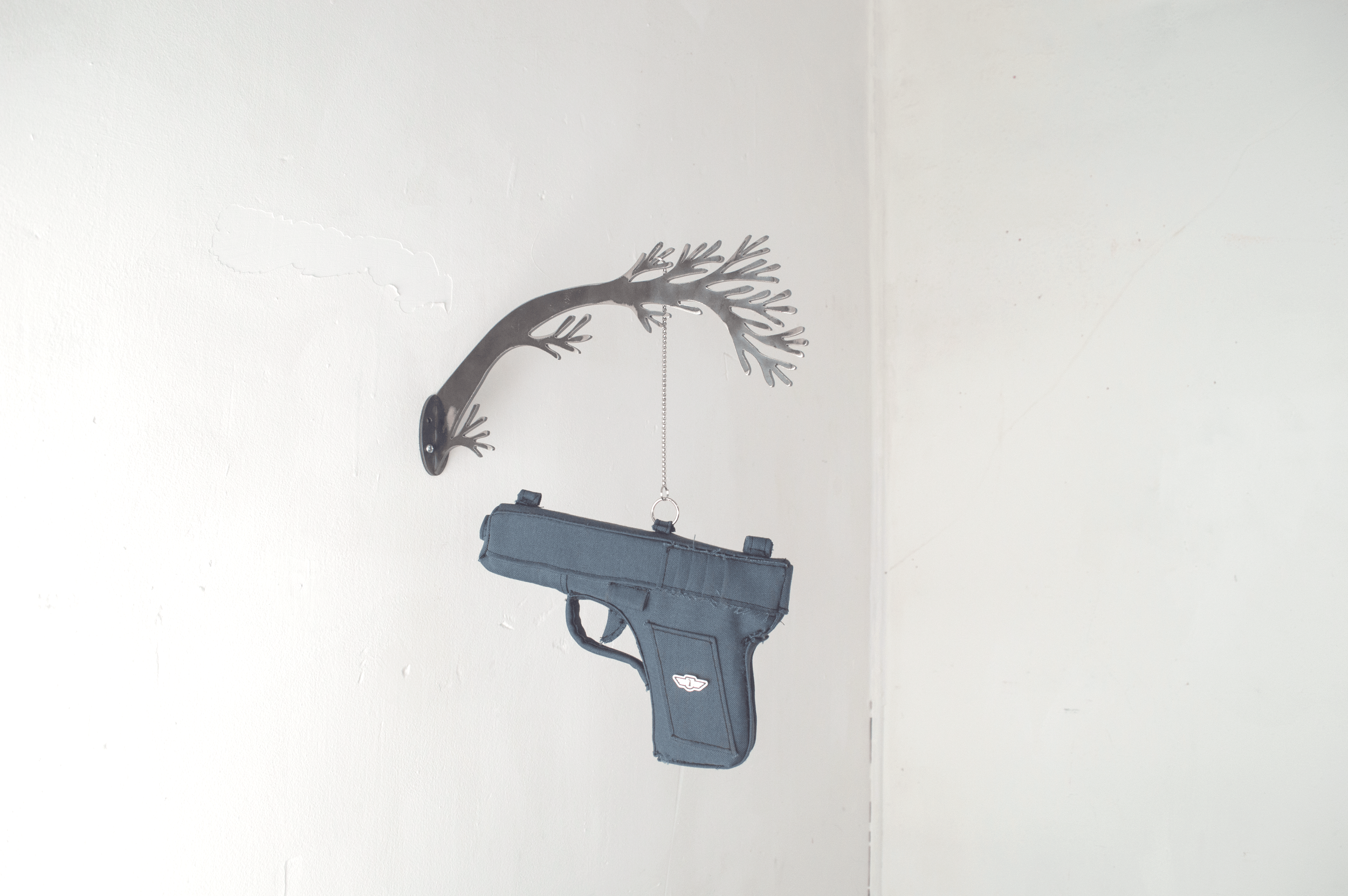
Repeat² continues the series through a second wall-mounted branch cut from steel. Its silhouette is inspired by the visual language of traditional Swiss paper cuttings, introducing an image associated with folklore, family, and national identity.
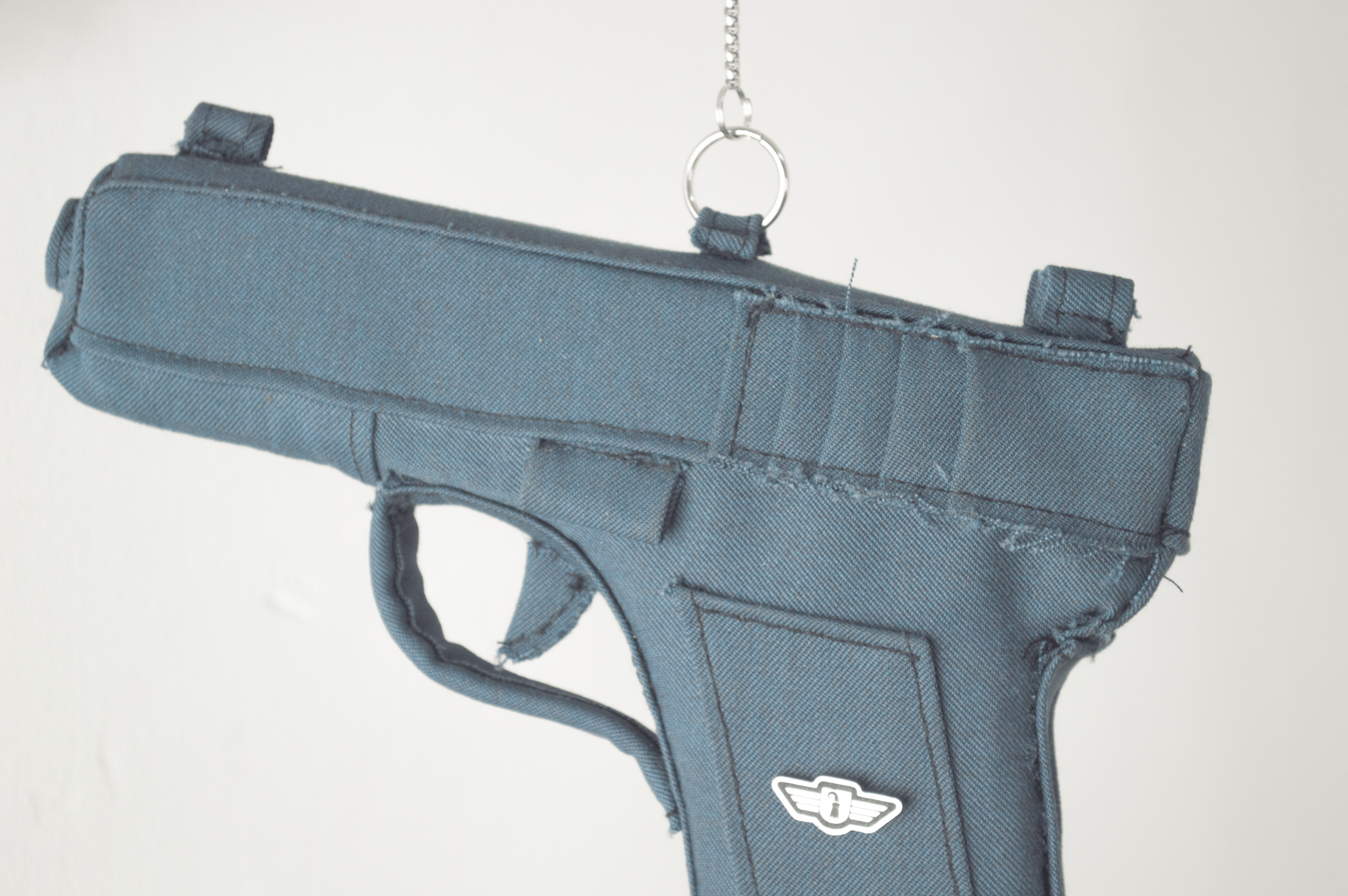
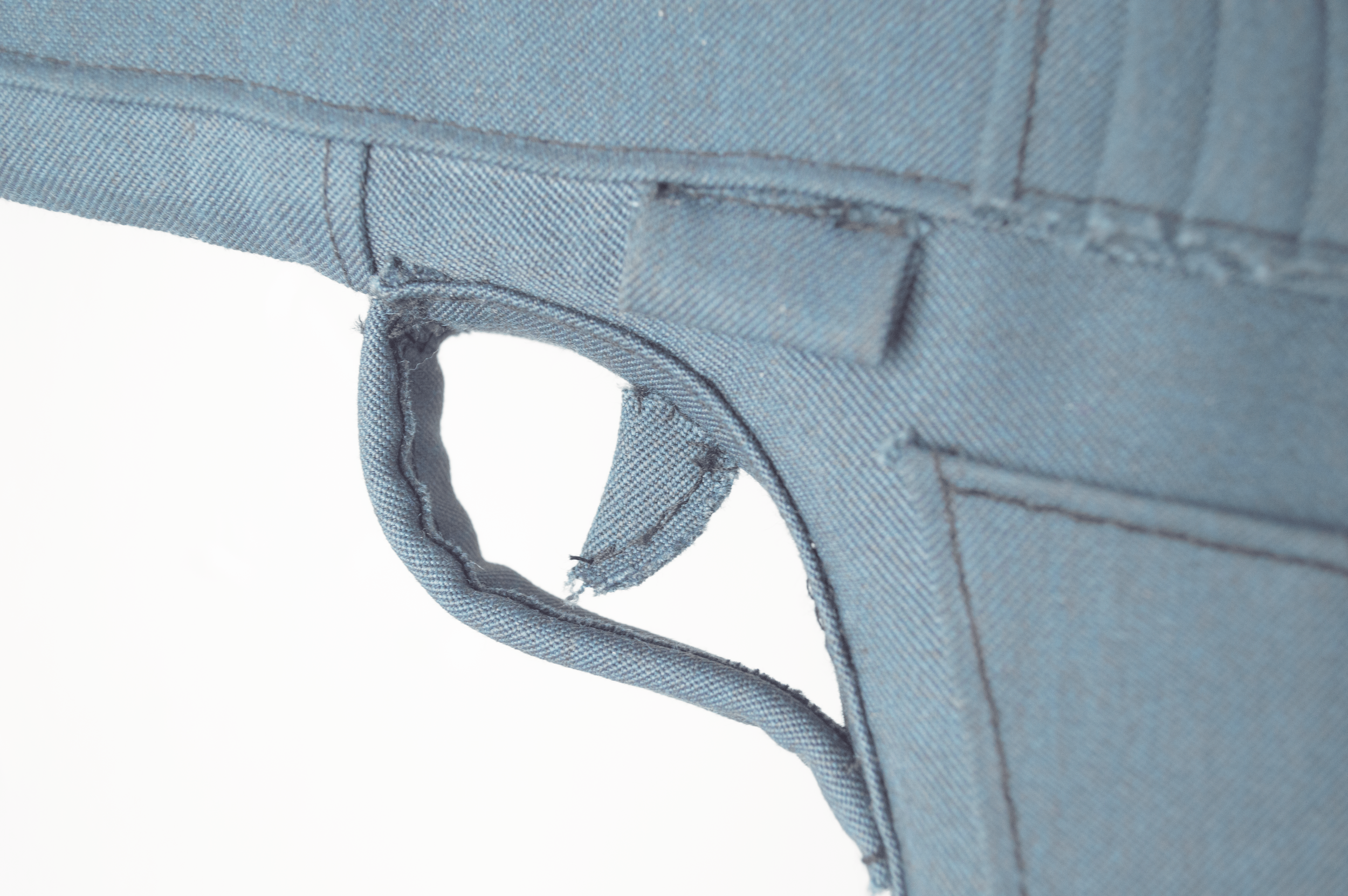
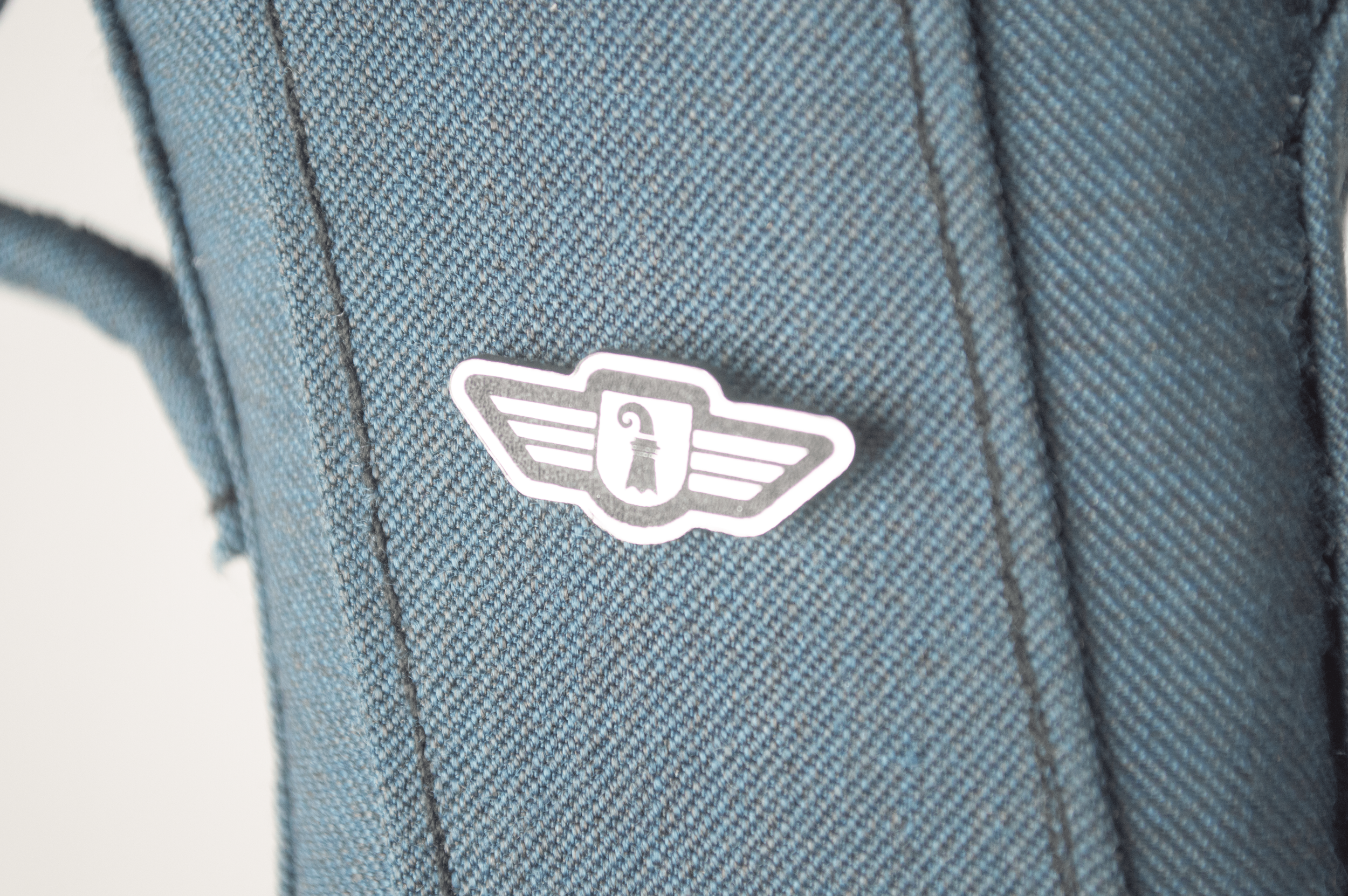
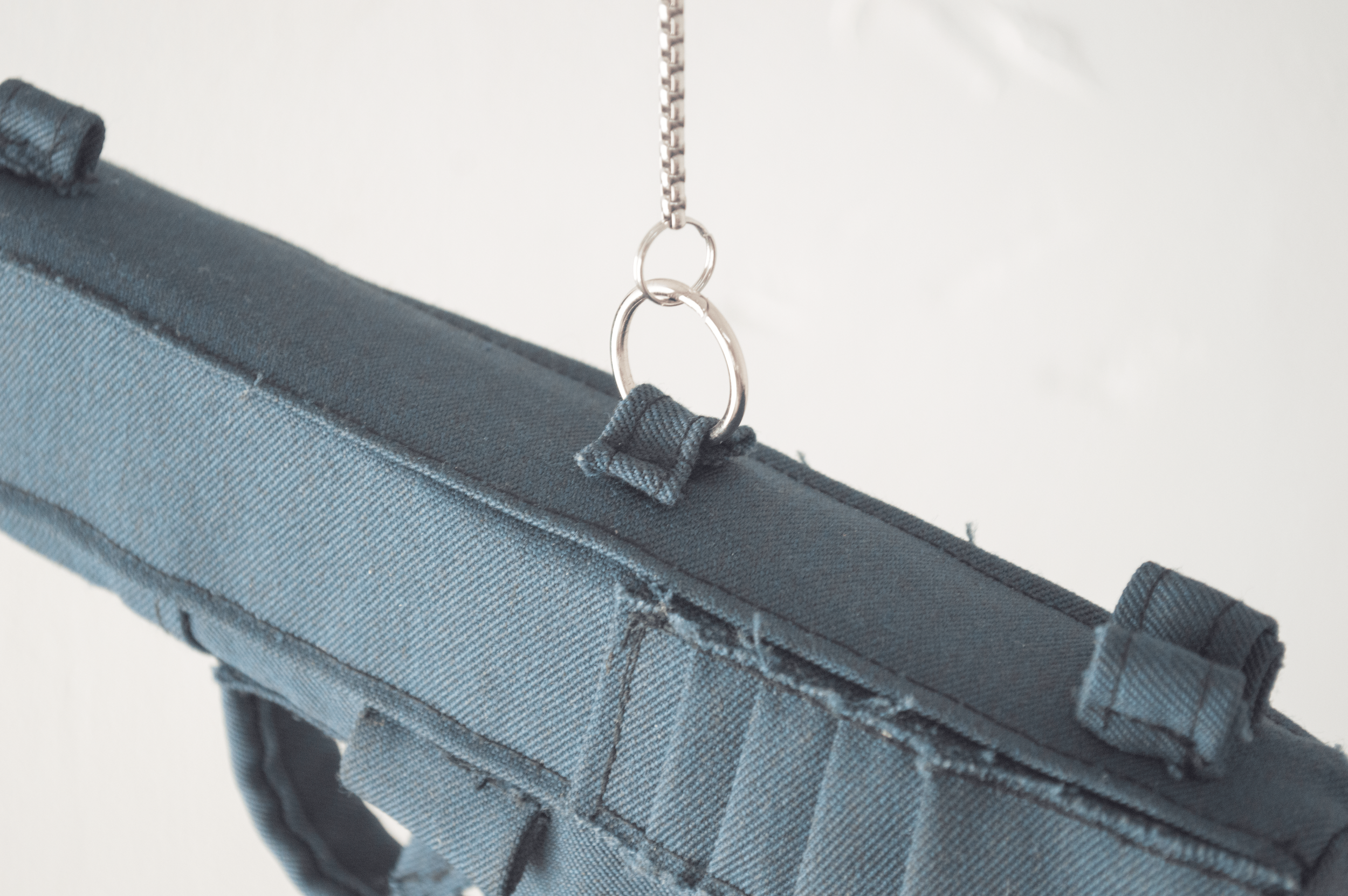
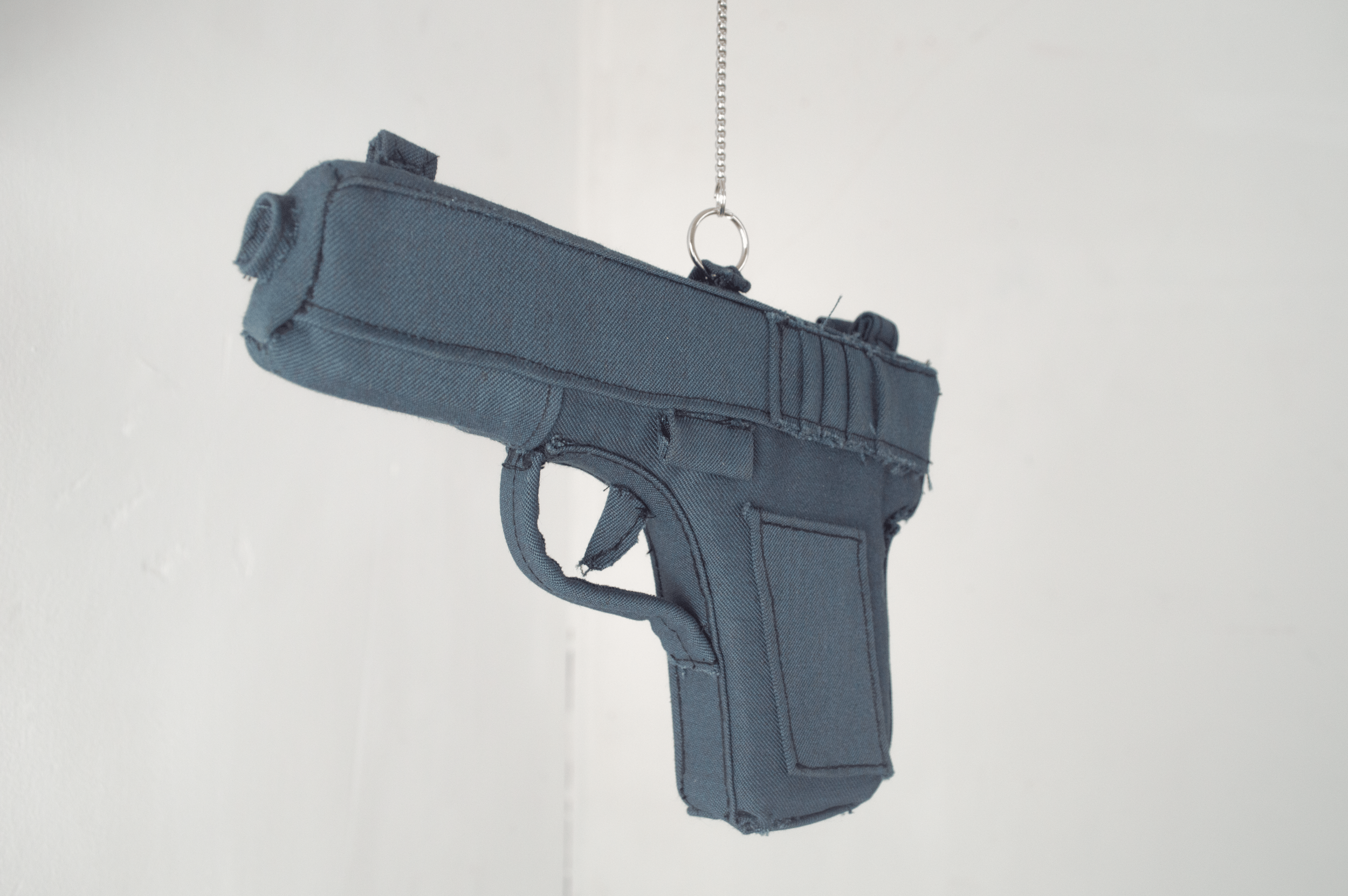
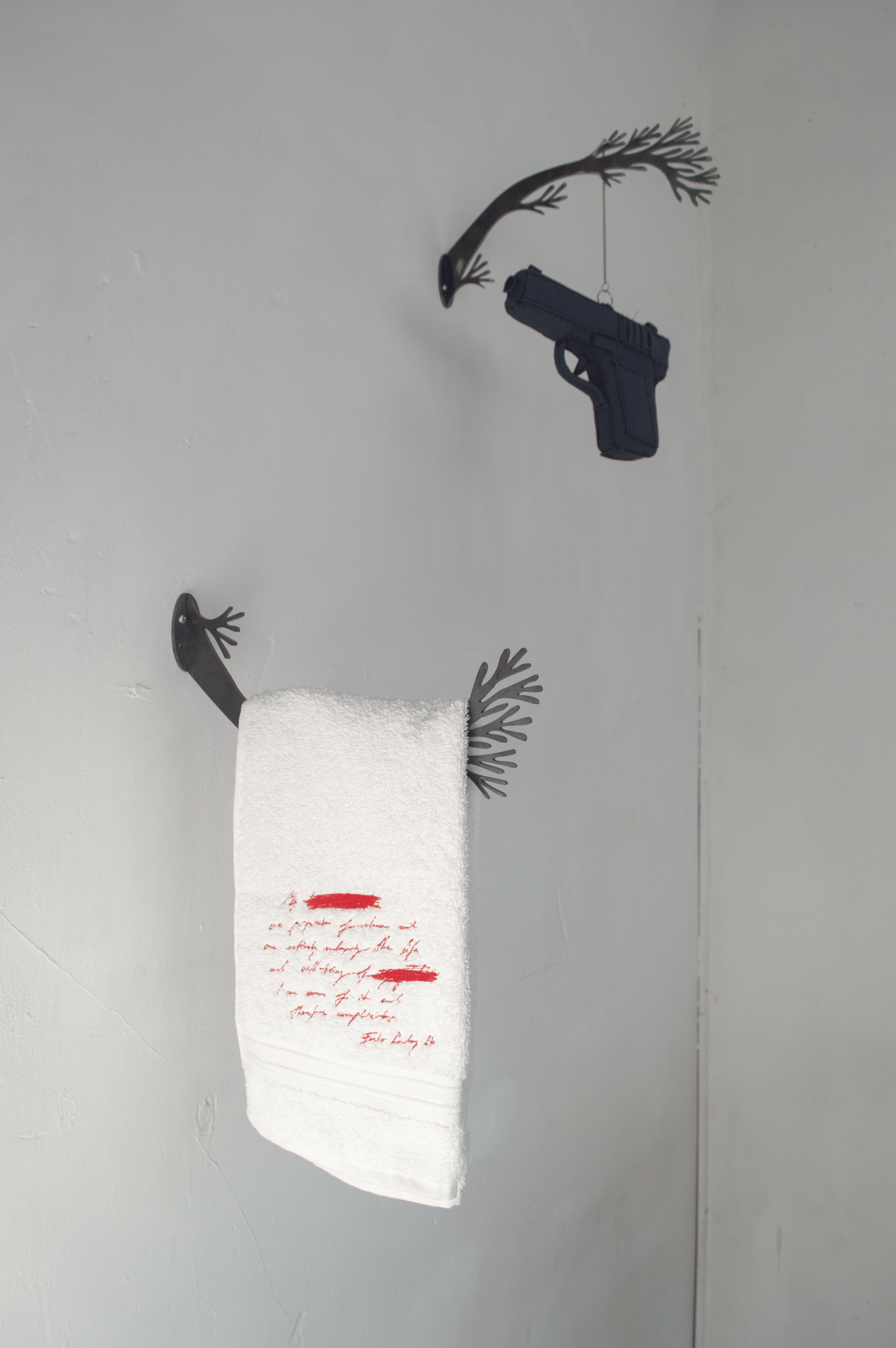
Suspended from the branch is a pistol sewn from fabric taken from a late twentieth-century Basel police uniform. Affixed to the pistol is an aluminum pin reproducing the insignia of the Basel police. Together, these elements reference the artist's father, who during the artist's childhood served with the Basel police. The pistol recalls a childhood incident in which the artist nearly shot his older brother amid the violence that marked the brothers' relationship.
Rendered in fabric and stripped of its function, the weapon takes on the appearance of a plush toy. This transformation underscores the absurdity of an object designed to kill becoming soft, tactile, and seemingly harmless. Hovering between comfort and threat, play and authority, it reflects the unsettling ways in which violence can become familiar, intimate, and embedded within everyday life.
Rather than functioning as evidence or accusation, the work exposes the fragile proximity between protection and danger, authority and violence. The branch becomes a family tree carrying not fruit but inherited symbols, asking how institutions, identities, and histories become embedded within intimate family life. Repeat² examines how violence is not only remembered but also reproduced through the objects and structures intended to provide safety.
Repeat³, 2026
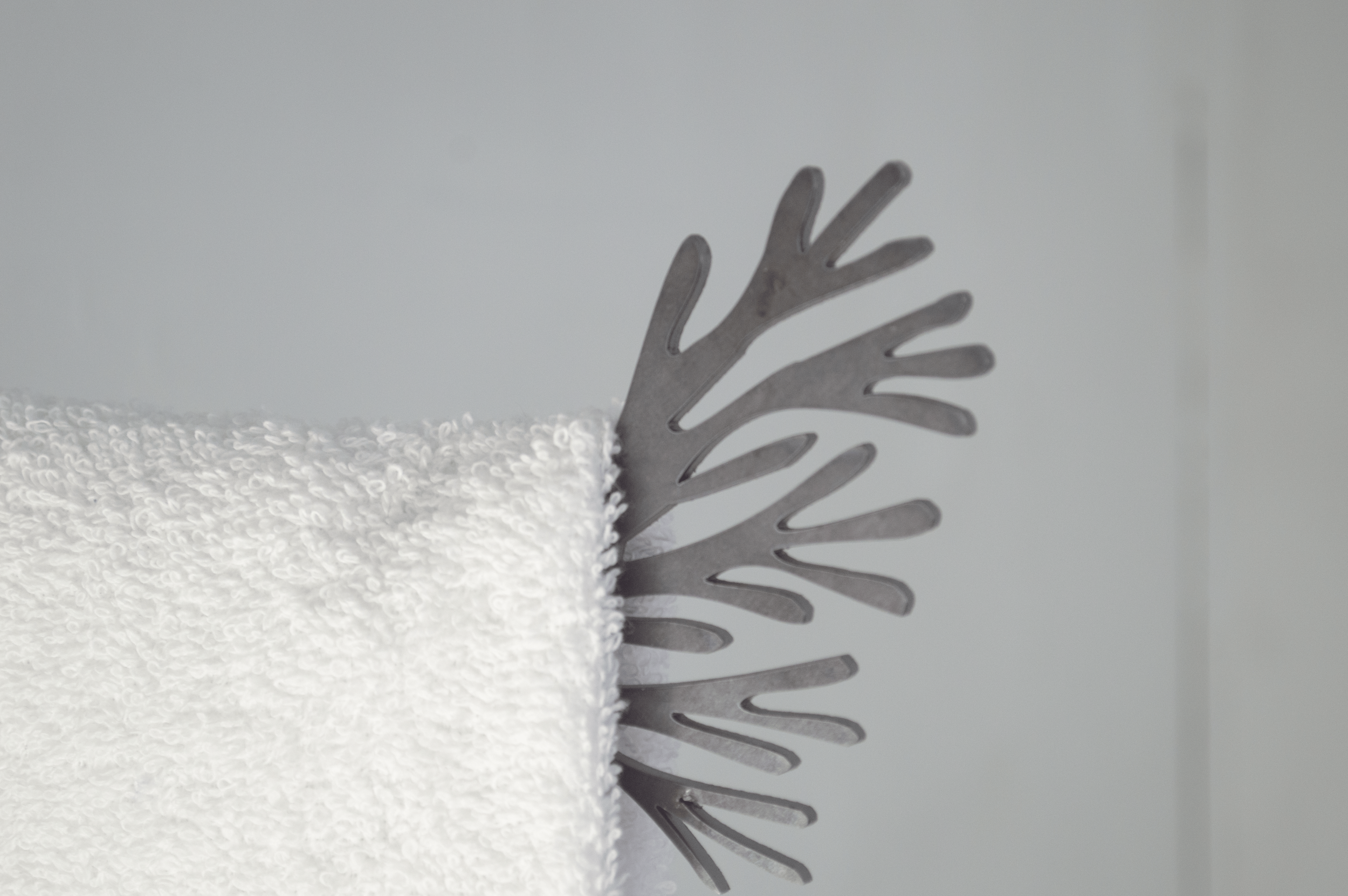
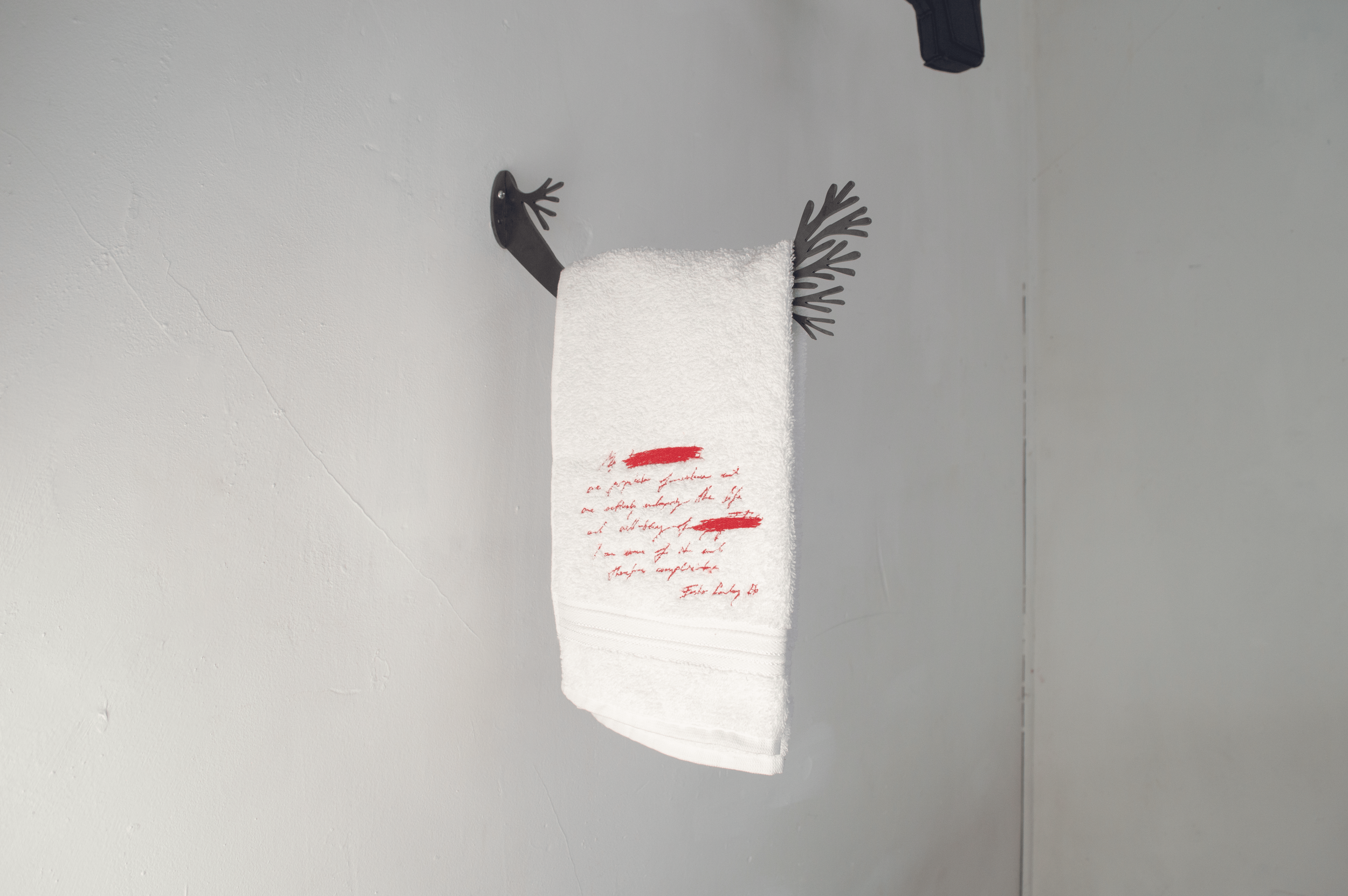
steel, embroidered towel
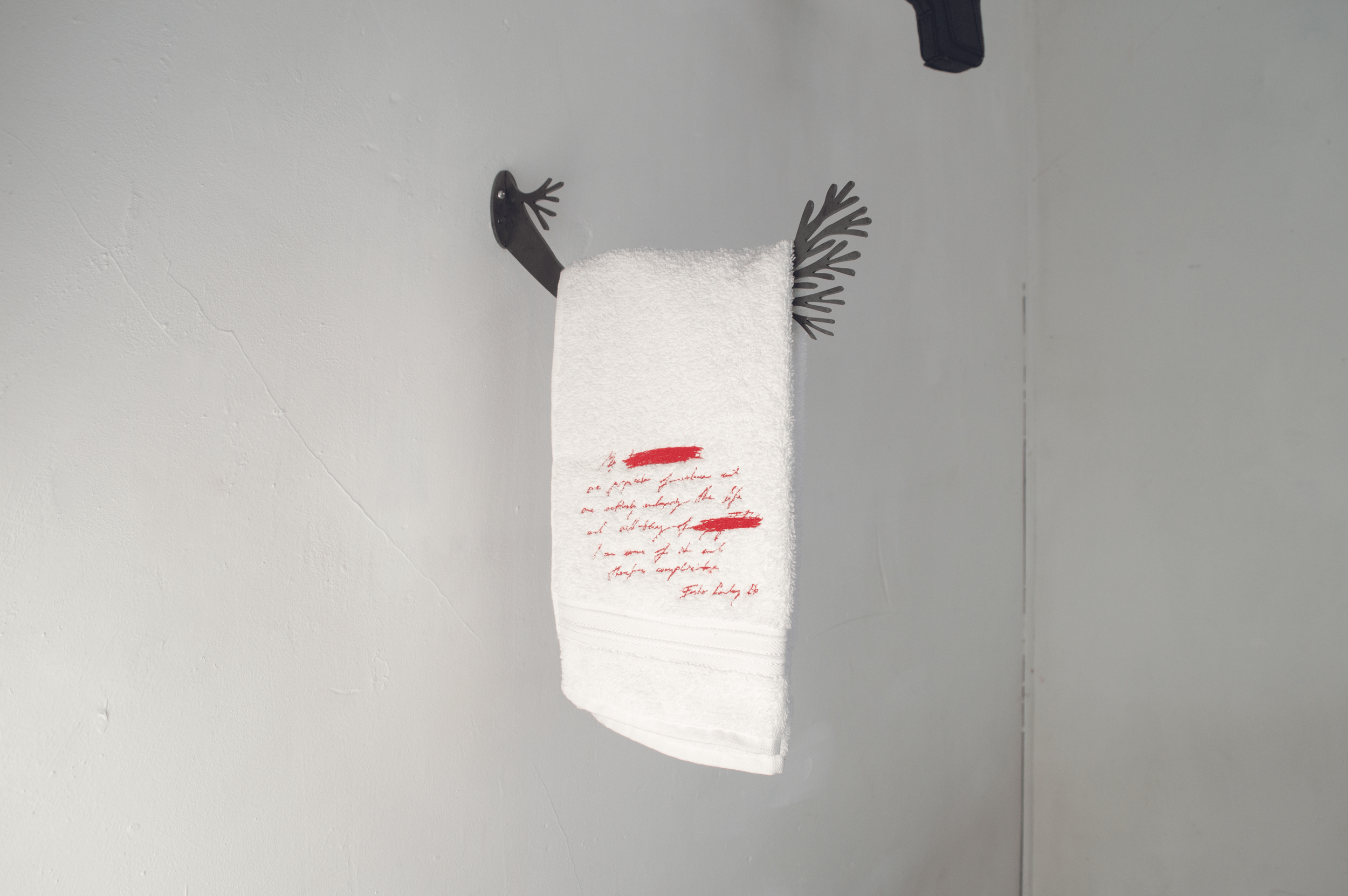
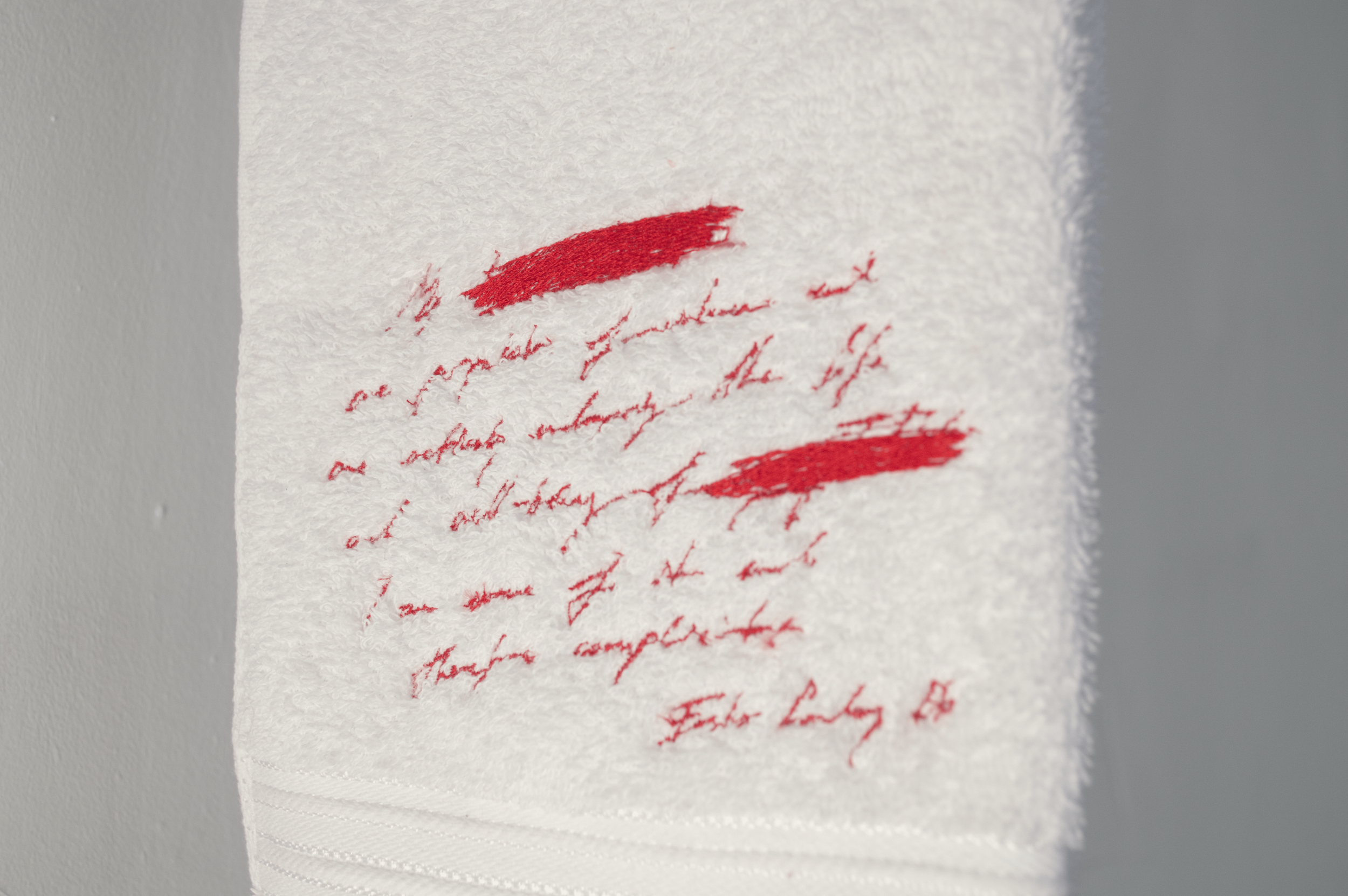
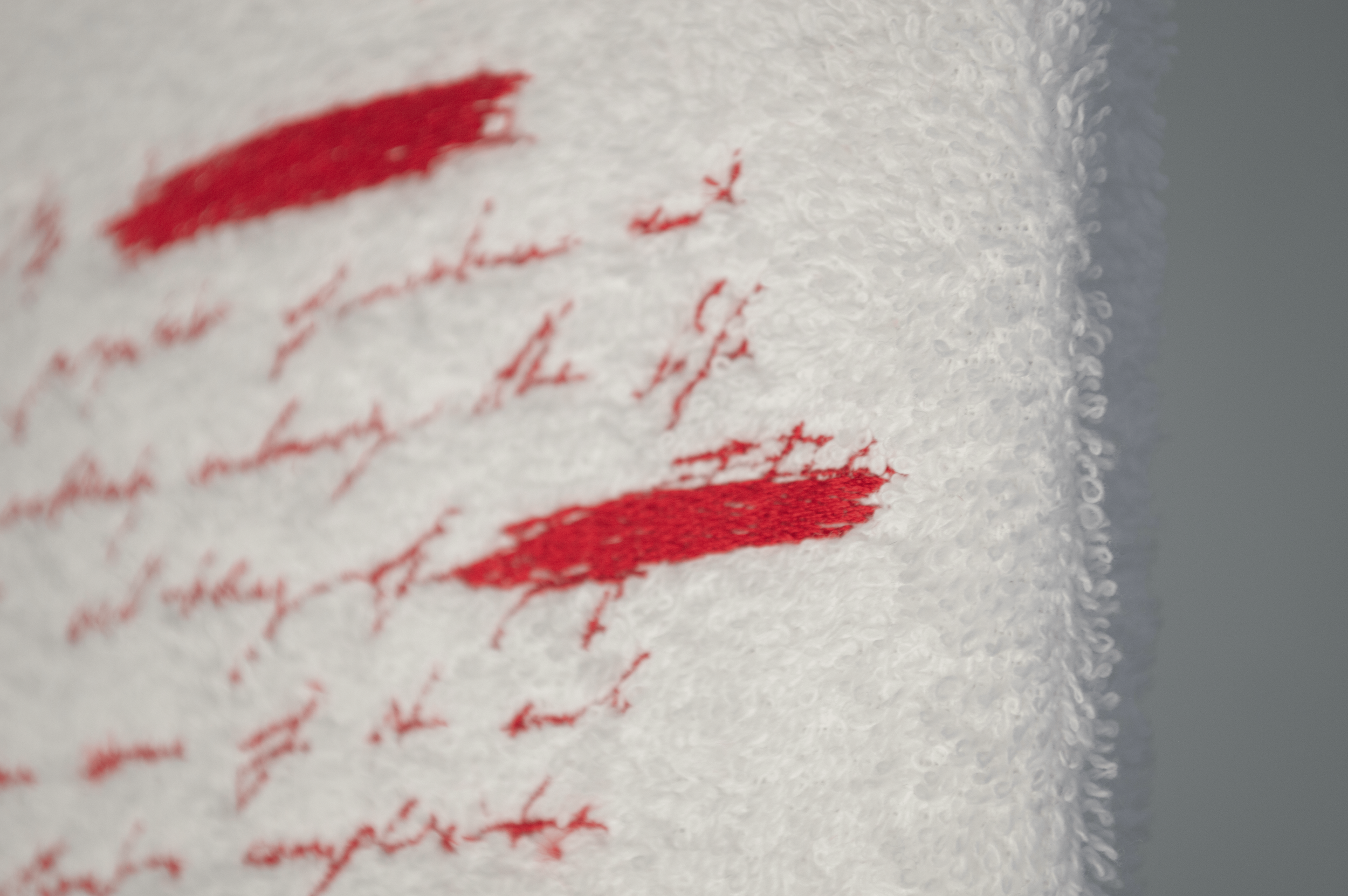
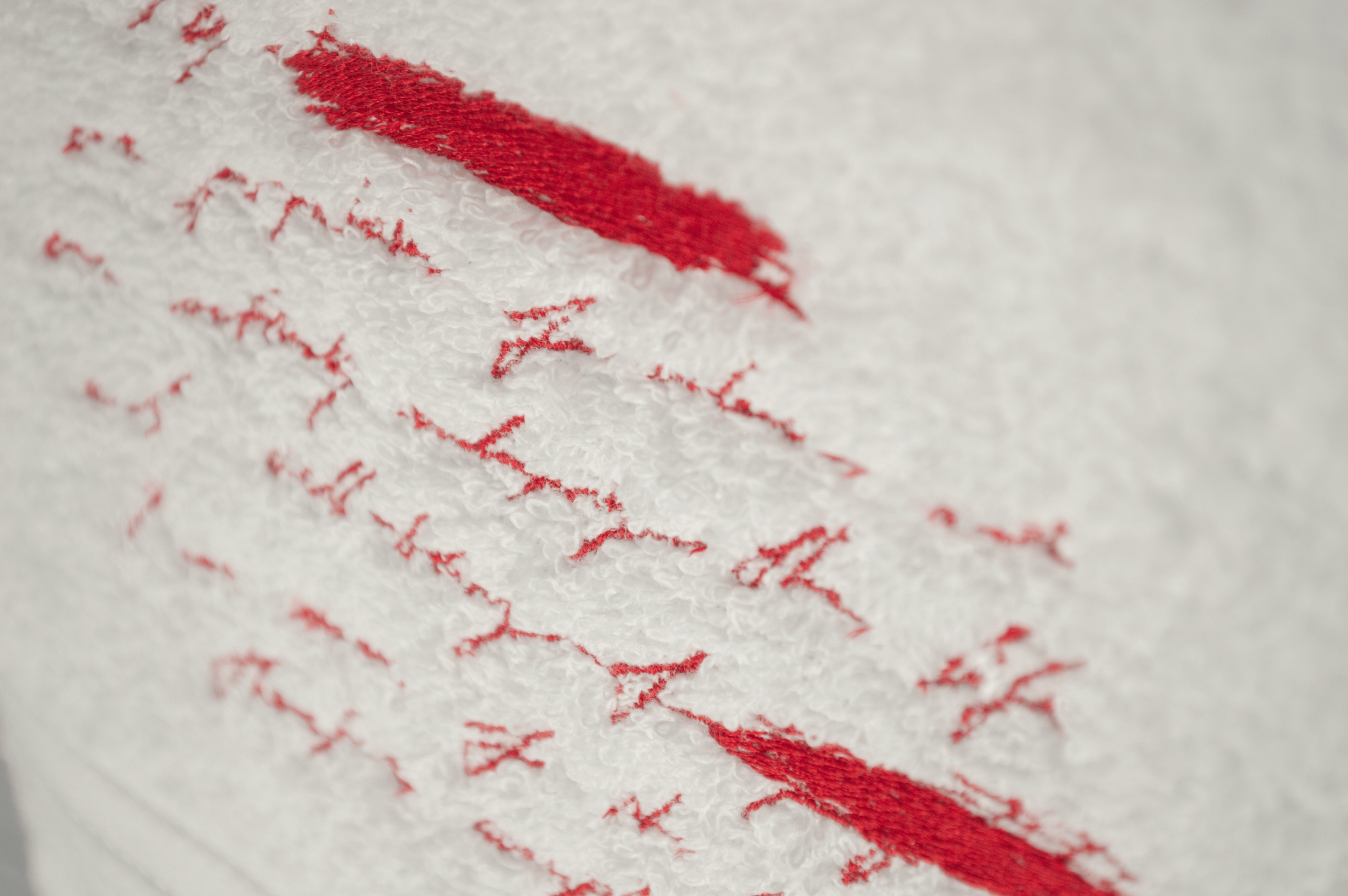
Repeat³ completes the trilogy with a third steel branch from which a white hand towel is suspended. Embroidered in red thread is a note written by the artist on Easter Sunday 2026. The text is a confession of complicity, confronting the possibility that to witness violence without intervening is itself a form of participation, allowing its consequences to echo beyond the present.
The work's date invites an association with Pontius Pilate, who washed his hands to declare himself innocent. Here, the towel—the object that dries the supposedly cleansed hands—bears the embroidered confession: "I am […] complicit." Stitched in red thread, the words evoke both blood and guilt. Unlike a stain that can be washed away, the embroidery remains permanently embedded in the fabric, transforming the towel into a lasting reminder that complicity cannot simply be washed away.
Transforming an ordinary domestic object into a moral statement, Repeat³ shifts the trilogy from inherited violence toward the question of collective responsibility. Rather than assigning blame, the work asks whether witnessing violence without intervention can ever leave one innocent, and how silence may allow cycles of harm to extend into lives yet to come.